

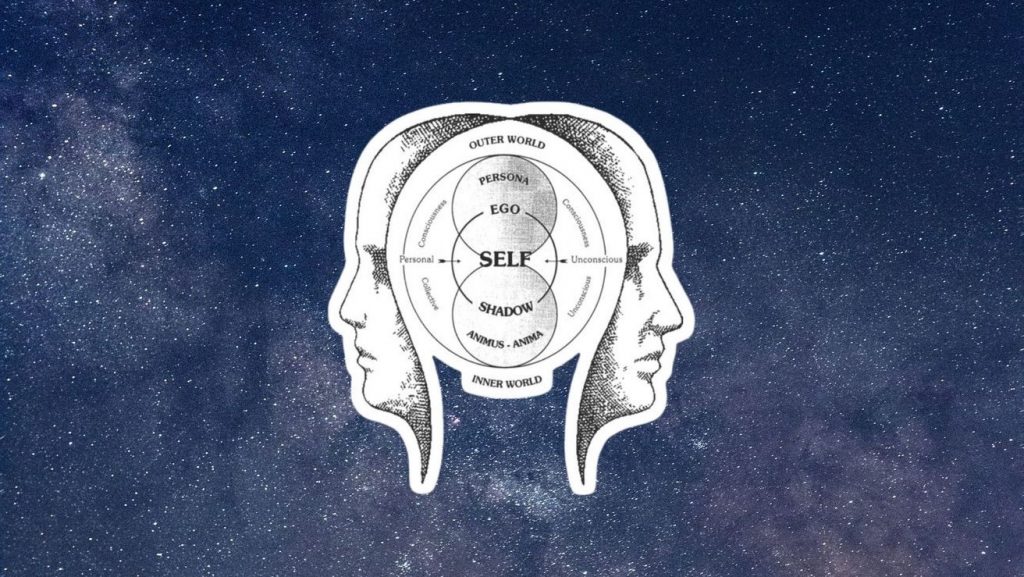
The Structure of the Psyche
The concept of the conscious and unconscious mind was developed by Sigmund Freud and later expanded by his student Carl Jung. Through careful observation, Jung recognised that most people operate primarily through direct thinking, which he described as the conscious mind. The conscious mind is goal-oriented, logical, and structured. It processes information through linear and sequential patterns, using language and reasoning to create order and meaning. Alongside this, Jung identified undirected thinking, which he described as the unconscious mind. Unlike conscious thought, the unconscious works primarily through images, symbols, and non-linear patterns. While this can make it harder for the conscious mind to interpret, Jung believed the unconscious enables deeper, more insightful psychological processing.
The Personal Unconscious
The personal unconscious contains memories, experiences, and emotions that have been forgotten or repressed. Repression occurs when something becomes conscious but is deemed unacceptable by the ego due to social norms or conditioning.
Jung referred to these rejected aspects of the self as the Shadow (or Lower Self). The shadow often contains beliefs related to weakness, inferiority, vulnerability, and instinctual or primitive qualities.
The Collective Unconscious
The collective unconscious, sometimes called the objective psyche, contains the shared spiritual and psychological heritage of humanity. According to Jung, it is made up of ancestral knowledge, imagery, and instincts that all humans are born with.
This layer of the psyche expresses itself through archetypes — universal patterns, symbols, and themes found across cultures and mythologies. These archetypes are not fixed; they can overlap and combine depending on psychological need.
Common archetypal themes include:
- Birth and death
- Power and rebirth
- The Mother
- The Child
- The Hero
- The Anima
Accessing the Unconscious Mind
A person can access the unconscious mind by slowing their brainwaves through relaxation and meditation:
- Alpha waves: 7–14 Hz
- Theta waves: 4–7 Hz
In these states, awareness shifts inward and the unconscious becomes more accessible.
The Pineal Gland and Inner Perception
The pineal gland, shaped like a pine cone and located in the centre of the brain, secretes melatonin and serotonin. When stimulated, it also produces DMT (N-dimethyltryptamine), a neurotransmitter associated with visual imagery, memory, and altered states of consciousness. In mystical and esoteric traditions, the pineal gland is linked to the Third Eye, believed to support intuition, spiritual awareness, and perception beyond ordinary sight
Archetypes and the Self
Archetypes are energetic centres within the psyche. They both attract and exert psychic energy and help structure our psychological experience. The central organising archetype is the Self, which integrates past, present, and future experiences. When a person accesses the unconscious, the ego has the opportunity to realign with the Self through a process of self-actualisation. Images and symbols arise from the unconscious as psychic energy moves through archetypal pathways and re-enters consciousness. These symbolic messages help the ego regain balance and alignment with the Self.
The Sound Therapy Process
Sound therapy can support access to the unconscious mind in a safe and contained way. The therapist’s first role is to establish safety, trust, and relaxation. If we view the psyche as made up of different parts, vulnerable parts (such as the inner child) are often protected by defensive structures. When safety is established, these protectors soften, allowing the Self to emerge.
Through gentle, repetitive sound, brainwaves slow into alpha and theta states, enabling psychic energy to build and unconscious imagery to arise. The therapist holds a steady, attentive presence, creating a container for transformation. In this shared space, therapist and client may enter a symbolic field together, allowing the therapist to respond intuitively using sound, instruments, and technique. This process is comparable to the mother–child relationship, where safety and attunement allow growth during vulnerable states.
Integration and Grounding
After the sound experience, a period of stillness, referred to in Buddhism as Shunyata, allows the psyche to settle. The therapist then gently guides the client back to waking consciousness through grounding, drawing awareness down through the body to the feet. Integration follows as unconscious images begin to surface into conscious awareness, often through verbal reflection.
Because this is deep psychological work, integration may continue over time. The practitioner supports the process by recognising that understanding unfolds gradually.
The Primal Mother–Child Relationship
Jung considered the Mother archetype to be the most significant. It symbolises creation, nourishment, and the earth itself. It may appear symbolically as a garden, well, forest, sea, or landscape. In early infancy, before the ego has developed, the mother is experienced as the Great Mother, providing the foundation for trust and security. As the ego develops, the child undergoes a necessary but often traumatic separation from this unity. Early repression of vulnerability or dependency can create what Jung described as the wounded child. Through unconscious work, these parts can be recontacted and met with compassion, love, and Self-energy. At a collective level, this process asks the archetypal question:
“Does life love me?”
Mythological Archetypes and the Gong Bath Experience
During a gong bath, unconscious archetypes may arise in symbolic, mythological, or visionary forms. These experiences can support both individual and collective healing.
Personal Experience
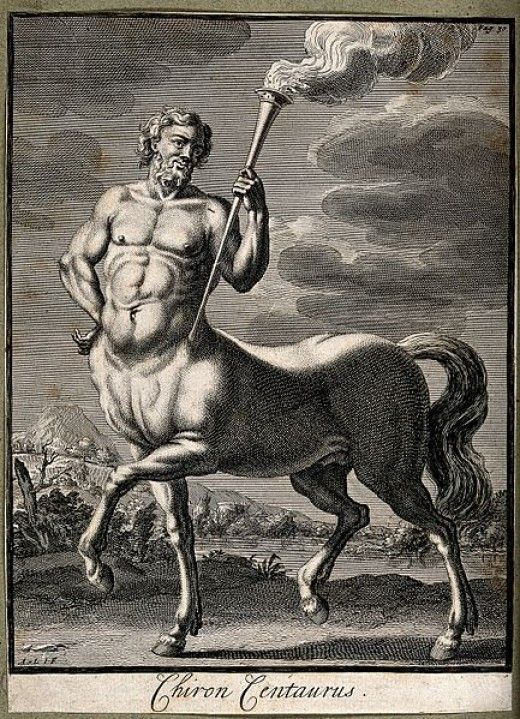
During a gong bath received during my practitioner training, I encountered the image of Centaurs — half-human, half-horse figures from Greek mythology. The experience evolved into a powerful sense of responsibility toward the Earth and its species, followed by imagery of my body dissolving into the four elements: earth, water, fire, and air, before re-forming. Afterwards, I felt calm, light, and deeply grounded.
Jungian Interpretation
The Centaur may symbolise the tension between instinct and intellect, or the ego’s early separation from the mother archetype. Historically, Centaurs also functioned as guardians, which may suggest protection at the threshold of deeper unconscious work. The elemental dissolution reflects alchemy, which Jung saw as a symbolic process of individuation — death, purification, and rebirth. The four elements represent balance across time, space, and identity, with the Self positioned at the centre (axis mundi).
Conclusion
Mythology connects us to the collective unconscious and reminds us of our ancestral origins. These stories guide the psyche through transformation and creative renewal, supporting integration, individuation, and wholeness.
Summary
Each person carries an unconscious drive toward wholeness and connection to Self. As modern culture has lost ritual pathways, many lack guidance for healing psychic wounds and accessing inner wisdom. Jung provides a map to the unconscious through symbols, images, and archetypes. The meditative resonance of sound, guided by an experienced sound therapist, can facilitate this journey. Through my work with gongs and continued study of Jungian psychology, sound healing, sandplay therapy, Internal Family Systems (IFS), and shamanic approaches, I have witnessed profound transformation, in others and myself, as unconscious material is brought into awareness, allowing growth, healing, and reconnection to collective wisdom.